El aumento de la normativa medioambiental sigue impulsando la necesidad de una gestión eficiente del agua utilizada en las fábricas de semiconductores.
By Prakash Govindan, COO of Gradiant
There is urgent need today for sustainability in water management at wafer fabrication and semiconductor manufacturing plants (or “fabs”). We are experiencing a global shortage of semiconductors that are required to control everything from automobiles to smartphones to appliances. As the semiconductor shortage persists, manufacturers are facing increasingly greater pressure to adopt sustainable and efficient practices in their water operations. Water serves a critical role in chip production, as it’s needed to rinse and clean silicon wafers as they are manufactured – and not just any water, but Ultrapure Water (UPW), which is thousands of times purer than drinking water. It takes roughly 1,400 -1,600 gallons of municipal water to make 1,000 gallons of UPW, with fabs using up to 5 million gallons daily.
At this time of unprecedented demand for semiconductors, severe droughts in major semiconductor manufacturing areas are threatening the operational continuity and expansion plans of brand owners and foundries. The intensive water consumption required by semiconductor fabs limits water availability for local households, businesses, and wildlife in the community. Further, in the major areas where fabs are located, such as Taiwan and the Western U.S., recent droughts have plagued these regions, thereby threatening the global supply chain, increasing the costs of production, and placing pressure on overall water availability.
El aumento de la escasez de agua influye en las nuevas tendencias tecnológicas
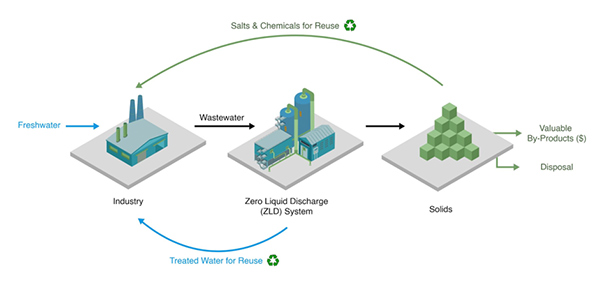
En respuesta a las prolongadas sequías y a la creciente demanda de semiconductores, los propietarios de marcas y los fabricantes se están centrando en nuevas formas de reciclar, reducir y reutilizar el agua empleada en su producción. Han surgido nuevos avances en el tratamiento del agua que permiten a los fabricantes de semiconductores recuperar y reutilizar las aguas residuales, eliminar contaminantes específicos e incluso recuperar productos valiosos de los flujos de residuos.
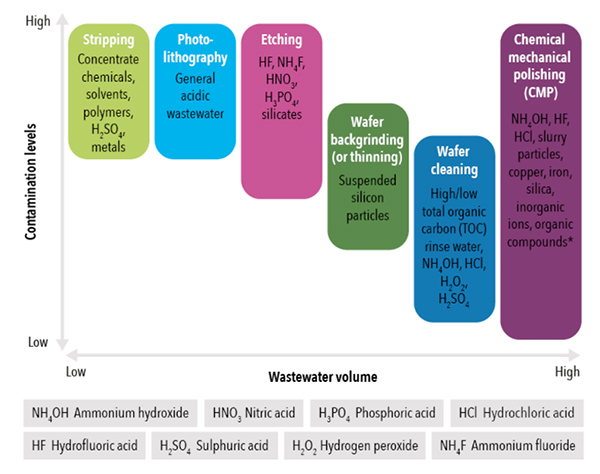
La reutilización del agua con medidas sencillas, como la refrigeración de los equipos, sigue estando muy extendida por su facilidad de aplicación, pero las fábricas están cada vez más interesadas en tratar y canalizar flujos individuales de aguas residuales de proceso, para que sirvan de agua de alimentación a los sistemas de UPW. Esta práctica es compleja, ya que cada corriente de aguas residuales es diferente y a veces requiere su propio enfoque de tratamiento. Cuando se aplica junto con otras estrategias de gestión del agua, los fabricantes pueden reducir considerablemente su consumo total de agua y garantizar la sostenibilidad y continuidad de sus operaciones de fabricación y cadena de suministro.
Presión de los líderes mundiales
Global leaders are becoming increasingly strict on water and wastewater quality and quantity as our freshwater resources are dwindling. Officials have recently announced ambitious goals to achieve a sustainable future, with a key focus to address the need for water. At the UN Climate Change Conference, better known as COP26, water was a primary focus of discussion. UN officials forecasted the world will see a 40% shortfall in water by 2030, prompting many leading brand owners from the world’s essential industries to pledge their operations will be net-water positive.
Outside of brand owners, many countries are also adopting initiatives for sustainable water management. In Asia, where most of the semiconductor manufacturing takes place, Singapore announced its Green Plan 2030 this year, to maximize the use of natural resources and reduce the amount of waste being discharged into the environment. As these initiatives and programs continue to grow and regulations related to water and wastewater management are enacted, brand owners and manufacturers are facing greater pressure to optimize their operations and minimize footprint through sustainable water practices.
Futuros planes de expansión
La necesidad de semiconductores no hará sino crecer en el futuro para satisfacer nuestro insaciable apetito de tecnología y dispositivos electrónicos en nuestra vida cotidiana. Los avances de la innovación en el tratamiento del agua permiten ahora a las industrias recuperar y reutilizar las aguas residuales, eliminar contaminantes y recuperar productos valiosos de los flujos de residuos. A medida que las grandes fábricas de chips se preparan para su expansión en los próximos años, el tratamiento avanzado del agua y las aguas residuales desempeñará un papel fundamental para satisfacer la demanda mundial de semiconductores.
El aumento de la normativa medioambiental sigue impulsando la necesidad de una gestión eficiente del agua utilizada en las fábricas de semiconductores.
By Prakash Govindan, COO of Gradiant
There is urgent need today for sustainability in water management at wafer fabrication and semiconductor manufacturing plants (or “fabs”). We are experiencing a global shortage of semiconductors that are required to control everything from automobiles to smartphones to appliances. As the semiconductor shortage persists, manufacturers are facing increasingly greater pressure to adopt sustainable and efficient practices in their water operations. Water serves a critical role in chip production, as it’s needed to rinse and clean silicon wafers as they are manufactured – and not just any water, but Ultrapure Water (UPW), which is thousands of times purer than drinking water. It takes roughly 1,400 -1,600 gallons of municipal water to make 1,000 gallons of UPW, with fabs using up to 5 million gallons daily.
At this time of unprecedented demand for semiconductors, severe droughts in major semiconductor manufacturing areas are threatening the operational continuity and expansion plans of brand owners and foundries. The intensive water consumption required by semiconductor fabs limits water availability for local households, businesses, and wildlife in the community. Further, in the major areas where fabs are located, such as Taiwan and the Western U.S., recent droughts have plagued these regions, thereby threatening the global supply chain, increasing the costs of production, and placing pressure on overall water availability.
El aumento de la escasez de agua influye en las nuevas tendencias tecnológicas
En respuesta a las prolongadas sequías y a la creciente demanda de semiconductores, los propietarios de marcas y los fabricantes se están centrando en nuevas formas de reciclar, reducir y reutilizar el agua empleada en su producción. Han surgido nuevos avances en el tratamiento del agua que permiten a los fabricantes de semiconductores recuperar y reutilizar las aguas residuales, eliminar contaminantes específicos e incluso recuperar productos valiosos de los flujos de residuos.
La reutilización del agua con medidas sencillas, como la refrigeración de los equipos, sigue estando muy extendida por su facilidad de aplicación, pero las fábricas están cada vez más interesadas en tratar y canalizar flujos individuales de aguas residuales de proceso, para que sirvan de agua de alimentación a los sistemas de UPW. Esta práctica es compleja, ya que cada corriente de aguas residuales es diferente y a veces requiere su propio enfoque de tratamiento. Cuando se aplica junto con otras estrategias de gestión del agua, los fabricantes pueden reducir considerablemente su consumo total de agua y garantizar la sostenibilidad y continuidad de sus operaciones de fabricación y cadena de suministro.
Presión de los líderes mundiales
Global leaders are becoming increasingly strict on water and wastewater quality and quantity as our freshwater resources are dwindling. Officials have recently announced ambitious goals to achieve a sustainable future, with a key focus to address the need for water. At the UN Climate Change Conference, better known as COP26, water was a primary focus of discussion. UN officials forecasted the world will see a 40% shortfall in water by 2030, prompting many leading brand owners from the world’s essential industries to pledge their operations will be net-water positive.
Outside of brand owners, many countries are also adopting initiatives for sustainable water management. In Asia, where most of the semiconductor manufacturing takes place, Singapore announced its Green Plan 2030 this year, to maximize the use of natural resources and reduce the amount of waste being discharged into the environment. As these initiatives and programs continue to grow and regulations related to water and wastewater management are enacted, brand owners and manufacturers are facing greater pressure to optimize their operations and minimize footprint through sustainable water practices.
Futuros planes de expansión
La necesidad de semiconductores no hará sino crecer en el futuro para satisfacer nuestro insaciable apetito de tecnología y dispositivos electrónicos en nuestra vida cotidiana. Los avances de la innovación en el tratamiento del agua permiten ahora a las industrias recuperar y reutilizar las aguas residuales, eliminar contaminantes y recuperar productos valiosos de los flujos de residuos. A medida que las grandes fábricas de chips se preparan para su expansión en los próximos años, el tratamiento avanzado del agua y las aguas residuales desempeñará un papel fundamental para satisfacer la demanda mundial de semiconductores.